Every lawn tells a story about how it has been watered. A new lawn needs patience and careful attention while a mature lawn needs consistency and smart scheduling. Watering both the same way often leads to weak roots, patchy turf, or unnecessary water use. Knowing how irrigation needs shift through spring, summer, and fall helps homeowners build a lawn that looks full and healthy year after year.
This guide explains how watering schedules differ for new grass and established lawns through each growing season so you can give your turf exactly what it needs at every stage.
Understanding the Needs of New Grass
When grass is newly seeded or sod is freshly installed, the root system is shallow. Young roots cannot reach deep soil moisture, so the surface must stay consistently damp. If the top layer dries out too often, germination slows, and new blades struggle to survive. If the soil stays soaked, roots fail to grow downward. The balance is steady moisture without standing water.
New grass thrives with frequent light watering at first, then a slow transition toward deeper and less frequent irrigation as roots strengthen. This progression trains the lawn to grow resilient roots that handle future heat and dry spells more easily.
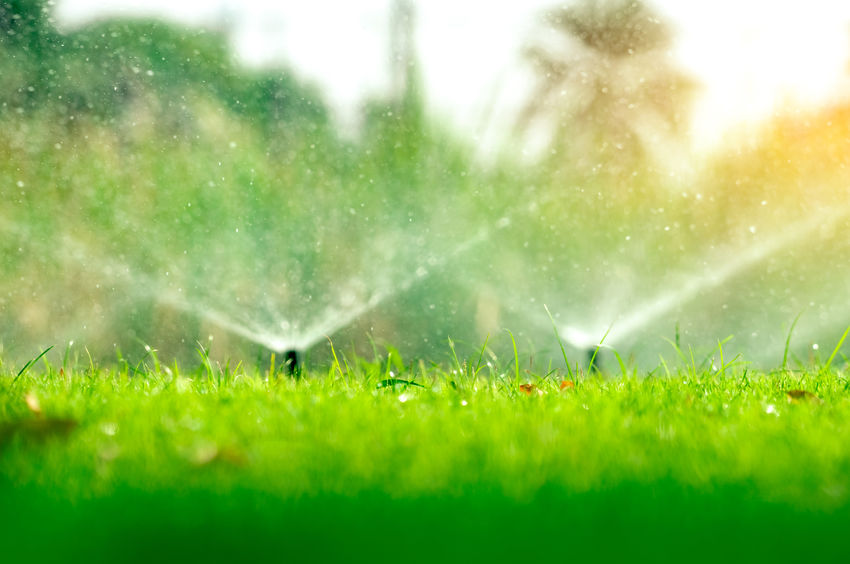
Automatic irrigation systems simplify this process by allowing short frequent cycles early on and quick schedule changes as the lawn matures.
Spring Watering for New Lawns
Spring offers ideal conditions for starting a new lawn. Temperatures are mild, rainfall is more common, and evaporation is lower.
Seeded lawns in spring require the top layer of soil to stay damp for the first few weeks. Most homeowners succeed by watering lightly multiple times per day. The key is short cycles that prevent the soil surface from crusting over. Once sprouts appear and begin to thicken, watering frequency should decrease while running times become slightly longer. This encourages roots to explore deeper soil.
Sod installed in spring needs similar attention. It must be watered immediately after installation and kept moist until roots knit into the soil below. Checking beneath the sod is helpful. If the soil under the sod feels dry, watering needs to increase slightly. If water pools on the surface or footprints remain for too long, watering should be reduced.
After two to three weeks, both seeded and sodded lawns should begin transitioning toward fewer but deeper watering sessions.
Spring Watering for Established Lawns
Established lawns wake up from winter with stored moisture in the soil. Their deeper roots allow them to rely less on frequent irrigation.
Spring watering for mature turf focuses on encouraging strong root depth and preventing oversaturation during rainy periods. One or two deep watering sessions per week is usually sufficient depending on rainfall and soil type. Early morning watering remains the best practice since it reduces evaporation and limits disease risk.
Rain sensors and smart controllers are especially valuable in spring since they stop irrigation when rainfall has already provided enough moisture.
Summer Watering for New Lawns
Summer is the most demanding season for young grass. Heat and sunlight dry the soil quickly while new roots are still developing.
Seeded lawns started in summer need close attention. Light watering several times per day keeps the topsoil from drying out. Midday watering should be limited since evaporation is highest, while early morning and late afternoon cycles help maintain consistent moisture.
Sod in summer also needs frequent watering until it fully anchors into the soil. Edges and corners dry first and should be checked regularly. After the first few weeks, watering frequency can slowly decrease while duration increases. This shift encourages deeper root growth and better drought tolerance.
Throughout summer establishment, observation is essential. Wilting or dull colored grass signals the need for more moisture. Puddling or mushy soil signals too much water.
Summer Watering for Established Lawns
Mature lawns handle summer stress best when watered deeply and less often. Daily shallow watering keeps roots near the surface, making turf more vulnerable to heat. Deep watering encourages roots to stretch downward into cooler soil layers.
Most established lawns benefit from two thorough watering sessions per week. Soil type influences this schedule. Sandy soil may need slightly more frequent watering while clay holds moisture longer. Watering early in the morning reduces evaporation and keeps blades dry during evening hours.
Signs of water stress include grass that takes on a blue green hue, footprints that remain visible, or curled blades. When these appear, a longer watering session is more effective than increasing daily frequency.
Fall Watering for New Lawns
Fall is another excellent season for new grass. Cooler days and lower sun intensity make moisture management easier.
Seeded lawns in fall still need frequent light watering during germination, though fewer daily cycles may be required than in summer. Once seedlings mature, watering frequency can taper while run times extend slightly.
Sod installed in fall usually establishes quickly. Regular watering for the first couple of weeks followed by a transition to deeper cycles helps roots anchor firmly before winter arrives.
Because evaporation is lower in fall, careful monitoring prevents overwatering and reduces disease risk.
Fall Watering for Established Lawns
Many homeowners underestimate the importance of fall watering for mature turf. Even as temperatures drop, grass continues storing energy and strengthening roots before dormancy.
One deep watering per week is often enough depending on rainfall. Irrigation should continue until just before system winterization. Proper fall hydration supports healthier spring green up and reduces winter stress damage.
The Key Difference Between New and Established Lawns
New lawns need frequent surface moisture and close monitoring. Established lawns need deep soil moisture and steady seasonal adjustments. Treating them the same way leads to poor root development or wasted water.
By following season specific watering strategies, homeowners create lawns that develop strong roots, resist disease, and maintain consistent color through changing weather.
Making Seasonal Watering Easy with Professional Irrigation
Managing seasonal schedules by hand can be difficult. A professionally designed irrigation system removes guesswork and delivers water precisely where and when it is needed. Controllers allow different programs for new grass and mature turf. Rain sensors and smart technology prevent unnecessary watering.
Routine maintenance ensures sprinkler heads, valves, and sensors stay accurate as seasonal demands change.
Building a Lawn That Thrives Every Season
Whether starting from seed, laying sod, or caring for a long-established lawn, seasonal watering practices make a noticeable difference. Adjusting irrigation through spring, summer, and fall strengthens roots, improves turf health, and enhances curb appeal.
With thoughtful watering strategies and a reliable irrigation system, your lawn becomes easier to maintain and more beautiful year after year. Contact Suburban Lawn Sprinkler at (508) 872-2727 today or visit us online for more information!